
Tag the door or opener safely
Place a Tech Was Here tag on a fixed jamb or opener housing, away from springs, cables, rollers, and tracks, then scan it and link it to the customer, bay, and equipment record.
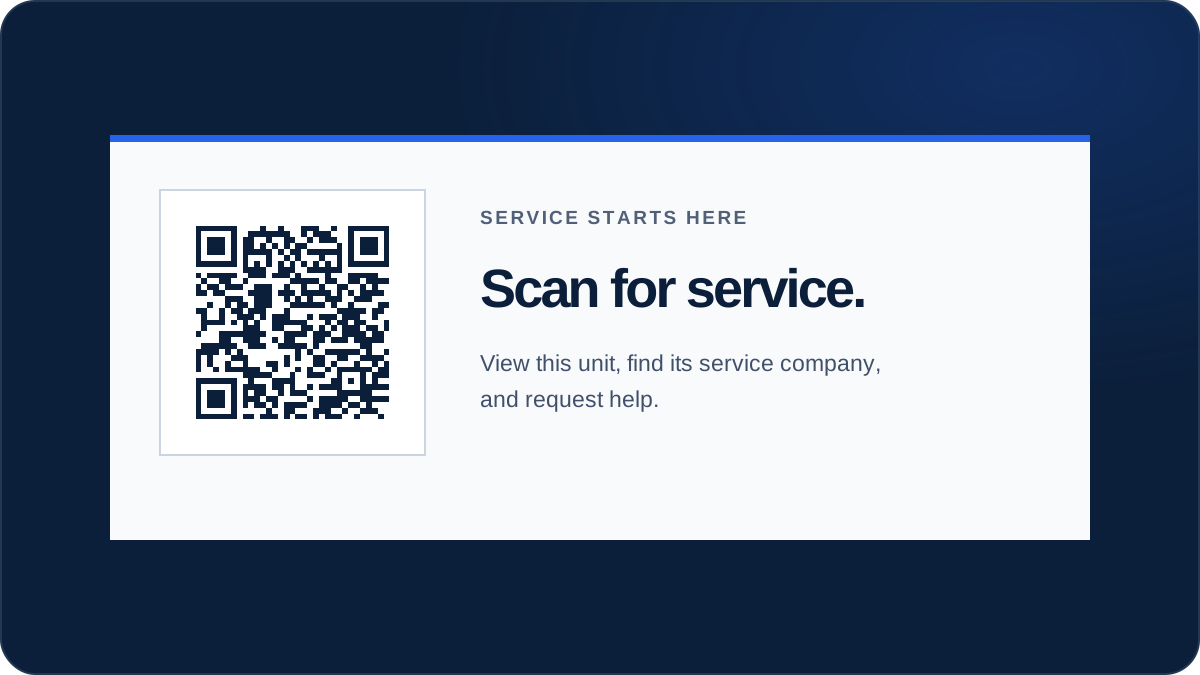
Put a durable QR service sticker at each garage door or opener. When the customer needs help later, one scan identifies the opening and sends the request back to your company—no app, login, or search required.
The serialized tag measures 3 × 1 inches and sits on a fixed surface. Your technician places one on a jamb or opener housing, away from springs, cables, rollers, and moving hardware, so the next scan identifies that exact door or opener.
Three steps keep the connection between the serviced opening and your office: tag the door or opener safely, let the customer scan the exact opening, and receive the request with the bay and door context already attached.
Place a Tech Was Here tag on a fixed jamb or opener housing, away from springs, cables, rollers, and tracks, then scan it and link it to the customer, bay, and equipment record.
When a door will not open or makes noise, the phone camera opens that exact door or opener and names your service company — no app, account, or login.
The request arrives with the door, bay, and customer already attached, so the office can dispatch to the correct opening the first time.
A property can contain several similar openings. Equipment-level tags help the customer and your office start with the same door in mind.
Identify each door by bay, side, or building so a homeowner can report spring, cable, roller, or track issues with the exact door attached.
Connect wall-mount, belt-drive, chain-drive, and commercial operators to the service company, even when the door itself was installed by a builder.
Distinguish left, center, and right bays or numbered commercial openings before the office schedules a visit to the wrong door.
Give long-lived gate operators and commercial openings serviced by your team the same direct request path as a home garage door.
The customer does not have to find an old work order or describe “the garage.” The scan page identifies the opening and current service company, then routes the request to your team with the tagged door or opener attached.
That does not guarantee a booked call, but it removes common friction between a stuck door and reaching the company that already knows it.
Use the full QR service tag placement guide for door-safe placement principles.
Tag a few doors and openers, then watch scans and requests before adding more openings. Review the service-company workflow or see pricing for your team.
A remote or paperwork gets replaced and lost. The Tech Was Here tag stays at the opening, so the scan still identifies the exact door or opener and reaches the company that services it.
No. The tag goes on a fixed jamb, interior wall, or opener housing — never springs, cables, rollers, tracks, or a moving panel. The placement guide covers door-safe surfaces.
Each tag identifies one physical door or opener, so left, center, and right bays or numbered commercial openings can each carry their own scan point.
A manager scans the affected bay and sends the issue with the building, bay, and opener context attached, while the site relationship stays private in the office workspace.
The complimentary kit includes 25 serialized 3 × 1-inch tags and three months of software. The remaining 75 starter tags are included when the paid plan begins, and additional 100-tag packs cost $50.
No. The phone camera opens the opening’s page, where the customer can confirm the door, see the current service company, and send a request without installing anything.
Start with 25 QR service tags and 3 months of Tech Was Here free. No card is required, and billing does not start automatically.